- M&A advisory Services
- info@ sun .com .bd

Real Estate Risk Management | A Strategic Guide to Protecting Property Investments in 2026

International Tax Consulting | Strategic Guidance for Global Businesses
January 11, 2026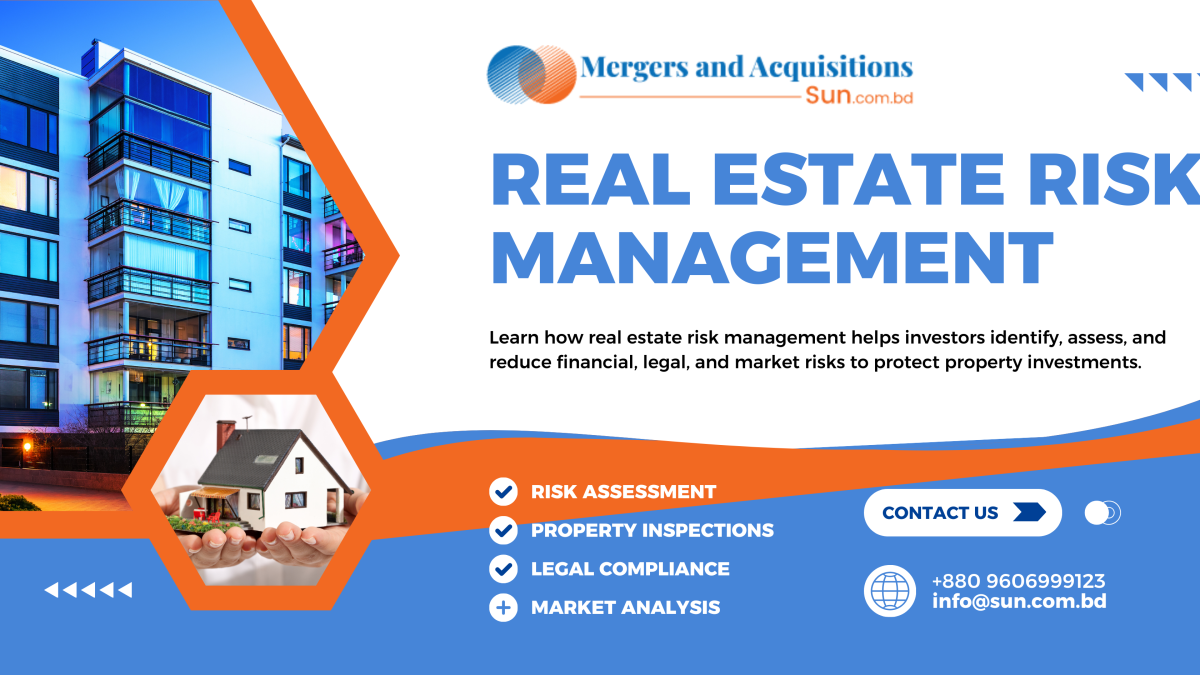
Real Estate Risk Management refers to the systematic identification, assessment, and mitigation of risks associated with property investments, development, leasing, and management. These risks may arise from financial volatility, legal disputes, market fluctuations, environmental issues, or operational failures.
In today’s dynamic property market, effective risk management is essential for investors, developers, property managers, and corporate real estate owners to protect capital, ensure compliance, and maintain long-term profitability.
This guide explains what real estate risk management is, why it matters, key risk types, mitigation strategies, and best practices, making it useful for both decision-makers and search engines.
Key Takeaways
- Real Estate Risk Management is essential for protecting property investments from financial, legal, operational, and environmental threats.
- Market volatility, financing challenges, legal compliance, and tenant behavior are the most common sources of real estate risk.
- A structured risk management process—identification, assessment, mitigation, and monitoring—reduces uncertainty and losses.
- Proper due diligence before acquisition significantly lowers investment and regulatory risks.
- Diversification across property types and locations helps minimize market-related risks.
- Strong legal documentation and regulatory compliance are critical to avoiding disputes and penalties.
- Insurance coverage and reserve funds provide financial protection against unexpected events.
- Professional property management improves operational efficiency and tenant risk control.
What Is Real Estate Risk Management?
Real Estate Risk Management is a structured and proactive approach to identifying, analyzing, and controlling potential threats that can negatively impact property value, rental income, legal compliance, and day-to-day operations. It ensures that real estate investors, developers, and property managers can safeguard their assets while maintaining stable and predictable returns.
This process involves several critical stages:
1. Risk Identification
The first step is recognizing potential risks that may affect a real estate asset. These risks can be financial, legal, operational, environmental, or market-related. Common examples include fluctuating property values, tenant defaults, regulatory changes, construction defects, and natural disasters. Early identification enables stakeholders to take action before risks escalate into losses.
2. Risk Assessment
Once risks are identified, they must be evaluated based on their likelihood and potential impact. This stage helps prioritize which risks require immediate attention and which can be monitored over time. Quantitative and qualitative assessments are often used to measure financial exposure, legal consequences, and operational disruptions.
3. Risk Mitigation
Risk mitigation focuses on implementing strategies to reduce or eliminate identified risks. This may include insurance coverage, legal due diligence, diversification of property portfolios, preventive maintenance, compliance audits, and tenant screening. Effective mitigation strategies lower vulnerability and enhance long-term asset stability.
4. Ongoing Monitoring
Real estate risks evolve due to changing market conditions, regulations, and economic factors. Continuous monitoring ensures that new risks are identified early and existing mitigation strategies remain effective. Regular property inspections, financial reviews, and compliance checks are essential components of this stage.
Overall Objective
The ultimate goal of real estate risk management is to reduce uncertainty, minimize financial losses, and protect investment returns. By adopting a disciplined risk management framework, stakeholders can improve decision-making, enhance asset performance, and achieve sustainable growth in both residential and commercial real estate investments.
Why Real Estate Risk Management Is Important
Real estate investments involve high capital, long time horizons, and regulatory exposure. Without proper risk management, investors may face significant financial and legal consequences.
Key Benefits:
- Protects investment capital
- Improves decision-making
- Ensures legal and regulatory compliance
- Stabilizes rental income
- Enhances long-term asset value
Key Types of Risks in Real Estate
Real estate investments are exposed to multiple categories of risk that can affect profitability, asset value, and operational stability. Understanding these risks allows investors and property managers to develop effective mitigation strategies and protect long-term returns.
1. Market Risk
Market risk arises from changes in economic conditions and real estate market analysis dynamics that influence property demand and pricing.
- Property Value Decline: Fluctuations in supply and demand, rising interest rates, or economic instability can reduce property values, impacting resale potential and equity.
- Oversupply or Low Demand: Excessive construction or shifting demographics can lead to higher vacancy rates and downward pressure on rents.
- Economic Downturns: Recessions, inflation, or reduced consumer spending can weaken rental demand and slow capital appreciation.
2. Financial Risk
Financial risk affects cash flow, financing structures, and overall investment sustainability.
- Interest Rate Fluctuations: Rising interest rates increase borrowing costs and reduce profitability, especially for leveraged investments.
- Cash Flow Shortages: Delayed rent payments, unexpected expenses, or prolonged vacancies can disrupt regular income streams.
- Loan Default Risk: Inadequate revenue or poor financial planning may lead to missed loan repayments and potential foreclosure.
3. Legal and Compliance Risk
Legal risks stem from failure to comply with laws, regulations, or contractual obligations.
- Zoning Violations: Non-compliance with zoning or land-use regulations can result in fines, forced modifications, or project shutdowns.
- Contract Disputes: Poorly drafted lease agreements or development contracts can lead to disputes with tenants, partners, or contractors.
- Regulatory Non-Compliance: Failure to meet tax, environmental, or safety regulations can cause legal penalties and reputational damage.
4. Operational Risk
Operational risk relates to inefficiencies or failures in managing real estate assets.
- Poor Property Management: Inadequate oversight can lead to higher costs, tenant dissatisfaction, and asset deterioration.
- Maintenance Failures: Delayed or improper maintenance can increase repair costs and reduce property value.
- Tenant Disputes: Conflicts over lease terms, service quality, or rent adjustments can disrupt operations and increase legal exposure.
5. Environmental Risk
Environmental risks arise from natural events and environmental conditions that threaten property safety and usability.
- Natural Disasters: Floods, earthquakes, fires, and storms can cause significant physical damage and income interruption.
- Soil or Environmental Contamination: Polluted land or hazardous materials can lead to costly remediation and legal liabilities.
- Climate Change Impact: Rising sea levels, extreme weather patterns, and temperature changes increase long-term exposure and insurance costs.
6. Tenant Risk
Tenant-related risks directly affect rental income and occupancy levels.
- Rental Default: Tenants may fail to pay rent due to financial instability or business failure.
- High Vacancy Rates: Frequent tenant turnover or poor location choice can lead to prolonged vacancies.
- Tenant Insolvency: Business tenants facing bankruptcy can terminate leases early, affecting cash flow and property valuation.
Why Understanding These Risks Matters
Identifying and categorizing real estate risks enables investors to implement targeted risk mitigation strategies such as diversification, insurance coverage, legal due diligence, and professional property management. This proactive approach strengthens portfolio resilience and ensures sustainable investment performance.
Real Estate Risk Management Process
A well-defined real estate risk management process provides a systematic approach to identifying, evaluating, and controlling risks throughout the property investment lifecycle. This structured framework helps investors, developers, and property managers minimize uncertainty, protect assets, and improve long-term performance.
1. Risk Identification – Detect Potential Threats Early
Risk identification involves recognizing all possible internal and external factors that may negatively affect a real estate asset. These risks can emerge during acquisition, development, leasing, or operation phases. Common sources include market volatility, legal non-compliance, financing issues, environmental hazards, and tenant-related challenges. Early identification allows stakeholders to take proactive action before risks escalate into costly problems.
2. Risk Analysis – Assess Probability and Financial Impact
Once risks are identified, they must be analyzed to determine their likelihood of occurrence and potential financial, legal, or operational impact. This step often includes cash flow analysis, stress testing, legal reviews, and market assessments. By quantifying potential losses and operational disruptions, investors gain a clearer understanding of exposure levels.
3. Risk Prioritization – Rank Risks by Severity
Not all risks carry the same level of importance. Risk prioritization helps stakeholders rank risks based on severity, urgency, and potential consequences. High-impact and high-probability risks are addressed first, while lower-risk issues may be monitored over time. This ensures efficient allocation of resources and focused risk response strategies.
4. Risk Mitigation – Apply Preventive or Corrective Measures
Risk mitigation involves implementing strategies to reduce the likelihood or impact of identified risks. Preventive measures may include insurance coverage, diversification, legal due diligence, compliance audits, strong lease agreements, and preventive maintenance. Corrective measures address existing issues through restructuring, renegotiation, or operational improvements.
5. Risk Monitoring – Continuous Evaluation and Adjustment
Real estate risks evolve due to changes in market conditions, regulations, tenant behavior, and environmental factors. Continuous monitoring ensures that risk mitigation strategies remain effective and new risks are detected promptly. Regular performance reviews, property inspections, compliance checks, and market analysis support timely adjustments and long-term stability.
Why a Structured Process Matters
A disciplined real estate risk management process improves decision-making, strengthens asset resilience, and enhances investor confidence. By integrating risk management into daily operations and strategic planning, organizations can achieve sustainable growth while minimizing unexpected losses.
Risk Mitigation Strategies in Real Estate
Effective risk management combines financial, legal, operational, and strategic controls.
Common Strategies:
- Diversifying property portfolios
- Conducting due diligence
- Purchasing adequate insurance
- Using legally sound contracts
- Maintaining reserve funds
- Hiring professional property managers
Real Estate Risks and Mitigation Measures
| Risk Type | Description | Mitigation Strategy |
| Market Risk | Property value volatility | Market analysis & diversification |
| Financial Risk | Cash flow shortages | Conservative leverage & reserve funds |
| Legal Risk | Regulatory violations | Legal due diligence & compliance audits |
| Operational Risk | Poor property maintenance | Professional property management |
| Environmental Risk | Natural disasters | Insurance & environmental assessments |
| Tenant Risk | Rent default | Tenant screening & lease enforcement |
Best Practices for Effective Real Estate Risk Management
Implementing best practices in real estate risk management helps investors and organizations proactively identify threats, minimize losses, and ensure long-term asset performance. These practices create a resilient framework that supports informed decision-making and sustainable growth.
- Conduct thorough due diligence before acquisition
- Monitor market trends and economic indicators
- Maintain strong legal documentation
- Review insurance coverage regularly
- Use data-driven decision-making
- Implement preventive maintenance programs
Conclusion
Real Estate Risk Management is not optional—it is a strategic necessity. In an environment shaped by economic uncertainty, regulatory complexity, and market volatility, proactive risk management ensures financial resilience and sustainable growth.
By identifying risks early, implementing structured mitigation strategies, and leveraging technology, real estate stakeholders can protect assets, enhance returns, and make informed decisions with confidence.
Frequently Asked Questions (FAQs)
Market risk can be reduced through property diversification, detailed market analysis, demand forecasting, and investing in locations with strong economic fundamentals.
Yes, even small investors face financial and legal risks. Risk management helps protect limited capital and ensures long-term investment sustainability.v
Yes, effective risk management reduces unexpected losses, improves income stability, and supports long-term value appreciation.
Yes, commercial real estate faces higher operational, financial, and legal risks, making structured risk management even more critical.